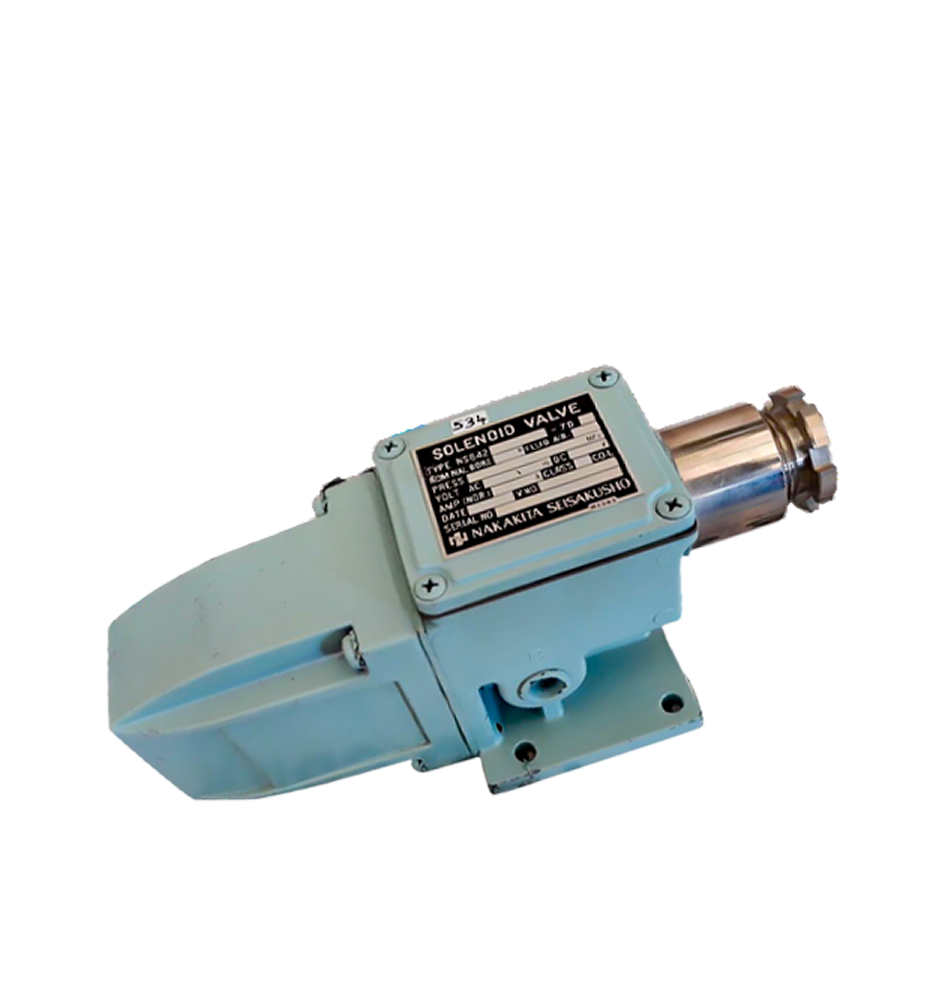
Nakakita Three-Port Solenoid Valve – Universal Instrument Air Control Solution for Industrial Automation
Introduction to Nakakita Three-Port Solenoid Valve
In modern industrial automation systems, precision and reliability are non-negotiable. From process plants to power generation facilities, pneumatic control circuits play a critical role in managing actuators, control valves, and other automation components. The Nakakita Three-Port Solenoid Valve is specifically designed to support sequence control operations such as changeover, operation, and stoppage of instrument air circuits.
Engineered as a universal type solenoid valve, Nakakita’s Three-Port Solenoid Valve allows free selection of flow direction and direction of action, providing flexibility in design and system integration. This makes it an essential component for industrial plants requiring dependable and responsive instrument air control.
As an experienced valve distributor and valve stockist, we supply Nakakita solenoid valves and complementary automation components to support complete pneumatic control systems across various industries.
What is a Three-Port Solenoid Valve?
A three-port solenoid valve (also known as a 3-way solenoid valve) is an electrically operated valve used to control the flow of air or fluid in pneumatic and automation systems. It typically features:
-
One inlet port
-
One outlet port
-
One exhaust port
This configuration allows the valve to switch airflow between two positions, making it ideal for:
-
Actuator control
-
Air supply switching
-
Venting operations
-
Sequence control in instrument air systems
Unlike manual valves such as ball valves or gate valves, solenoid valves operate automatically through electrical signals, enabling seamless integration into automated process control systems.
Product Overview: Nakakita Three-Port Solenoid Valve
Nakakita Three-Port Solenoid Valve is designed for instrument air circuits and industrial sequence control applications. It is a universal-type device, offering flexible installation and functional adaptability.
Core Function
-
Used for changeover control
-
Used for operation control
-
Used for stoppage control
-
Designed for instrument air circuits
-
Supports flexible flow direction configuration
This universal functionality makes it suitable for integration into complex pneumatic control systems.
Key Features of Nakakita Three-Port Solenoid Valve
1. Universal Type Design
One of the primary advantages of Nakakita Three-Port Solenoid Valve is its universal type configuration. This allows:
-
Free selection of flow direction
-
Flexible selection of action direction
-
Simplified piping design
-
Adaptability to various control logics
This flexibility reduces engineering constraints during system design and improves installation efficiency.
2. Reliable Sequence Control
Sequence control is critical in industrial automation systems. Whether starting or stopping pneumatic actuators, switching air supply, or venting circuits, the solenoid valve must operate precisely and consistently.
Nakakita solenoid valve ensures:
-
Stable switching performance
-
Accurate response to electrical signals
-
Reliable operation in continuous duty cycles
-
Consistent instrument air management
Reliable sequence control enhances overall system safety and operational accuracy.
3. Optimized for Instrument Air Circuits
Instrument air is commonly used to power control valves, actuators, positioners, and other pneumatic equipment. A failure in instrument air management can lead to operational downtime.
Nakakita Three-Port Solenoid Valve is designed specifically for:
-
Pneumatic control loops
-
Actuator signal switching
-
Control valve operation
-
Emergency shutdown systems
By maintaining stable airflow direction and switching, it supports reliable process control.
4. Flexible Flow Direction Selection
Unlike fixed-direction solenoid valves, this universal type allows engineers to configure flow direction based on system requirements.
Advantages include:
-
Reduced inventory complexity
-
Easier replacement and maintenance
-
Improved installation flexibility
-
Simplified engineering documentation
This makes it a practical solution for valve stockists and industrial maintenance teams.
Application Industries
1. Chemical Plants
In chemical processing facilities, automation systems regulate temperature, pressure, and flow conditions. The Three-Port Solenoid Valve is used to:
-
Operate pneumatic control valves
-
Switch instrument air supply
-
Control process sequencing
-
Support safety interlocks
Reliable solenoid operation ensures smooth and safe process transitions.
2. Petrochemical Plants
Petrochemical systems require precise and responsive control mechanisms. Solenoid valves are commonly installed in:
-
Control valve actuation circuits
-
Emergency shutdown (ESD) systems
-
Pneumatic signal routing
-
Compressor control systems
Nakakita solenoid valves contribute to stable automation performance.
3. Power Generation Plants
In power plants, pneumatic circuits control various auxiliary and safety systems.
Applications include:
-
Turbine auxiliary controls
-
Boiler control instrumentation
-
Safety interlock systems
-
Pressure control circuits
Reliable solenoid valve performance is critical for maintaining plant stability.
4. Industrial Manufacturing
Manufacturing facilities rely on pneumatic automation for equipment control.
Typical uses include:
-
Air cylinder operation
-
Production line sequence control
-
Automated machinery activation
-
Pneumatic signal switching
Universal configuration simplifies system integration.
Integration with Other Nakakita Automation Products
Nakakita provides a complete range of automation and control components that integrate seamlessly with the Three-Port Solenoid Valve:
-
Nakakita Automatic Controllers
-
Nakakita Pressure Transmitter
-
Nakakita Automatic Indicating Controller
-
Nakakita Automatic / Manual Selector
-
Nakakita Pressure Converter
-
Nakakita Select Relay
-
Nakakita Positioner
-
Nakakita Booster Relay
-
Nakakita Filter Regulator
-
Nakakita Air Chamber
Together, these components form a comprehensive industrial automation solution for pneumatic and process control systems.
Solenoid Valve vs Other Industrial Valves
Understanding the difference between solenoid valves and other industrial valves is essential:
-
Ball Valve: Manual or actuated isolation valve
-
Gate Valve: Full open/close isolation valve
-
Check Valve: Prevents backflow
-
Control Valve: Modulates flow continuously
-
Solenoid Valve: Electrically actuated on/off or switching valve
Solenoid valves are typically used as pilot valves or switching devices within larger control systems.
Installation and Maintenance Considerations
Installation Benefits
-
Compact design
-
Flexible port configuration
-
Easy electrical integration
-
Adaptable mounting orientation
Maintenance Recommendations
-
Periodic electrical coil inspection
-
Air supply cleanliness verification
-
Seal and internal component check
-
Functional response testing
Proper maintenance ensures long service life and reliable operation.
Why Choose Nakakita Three-Port Solenoid Valve?
Proven Engineering Experience
Developed from extensive experience in plant automation systems.
Flexible Universal Configuration
Supports multiple flow directions and system layouts.
Reliable Industrial Performance
Ensures stable switching and consistent instrument air management.
Complete Automation Ecosystem
Compatible with Nakakita’s broader automation product range.
Trusted Valve Distributor Support
Available through professional valve distributors and valve stockists with technical assistance.
Our Position as Valve Distributor and Automation Supplier
As a professional valve distributor and valve stockist, we supply Nakakita Three-Port Solenoid Valve and full automation support equipment.
We serve industries including:
-
Oil & Gas
-
Petrochemical
-
Power Generation
-
Manufacturing
-
Water Treatment
-
Marine Engineering
In addition to solenoid valves, we supply:
-
Ball valves
-
Gate valves
-
Check valves
-
Control valves
-
Safety relief valves
-
Actuators
-
Pneumatic accessories
Our technical team assists in product selection, system compatibility review, and installation planning.
Maintenance and Lifecycle Management
Lifecycle cost efficiency depends on:
-
Proper installation
-
Clean instrument air supply
-
Routine inspection
-
Timely component replacement
Nakakita solenoid valves are designed for durability and operational stability in industrial environments.
Conclusion
The Nakakita Three-Port Solenoid Valve is a universal, reliable, and flexible solution for instrument air sequence control in industrial automation systems. Designed for changeover, operation, and stoppage functions, it allows free selection of flow direction and action direction, ensuring adaptability in various plant configurations.
With strong compatibility across Nakakita automation components and support from experienced valve distributors and valve stockists, this solenoid valve provides dependable performance in chemical plants, petrochemical facilities, power stations, and industrial manufacturing systems.
Contact us today to discuss your automation requirements and receive expert technical assistance for selecting the right industrial solenoid valve solution.