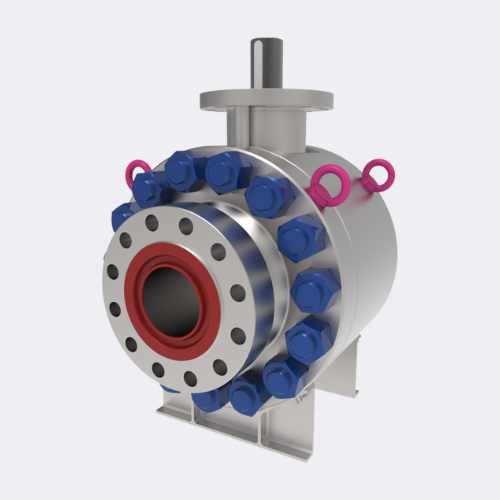
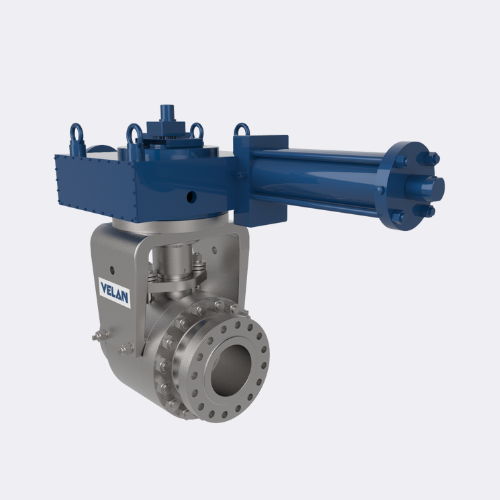
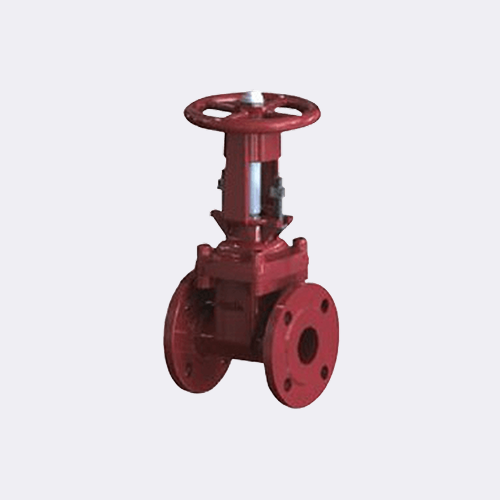
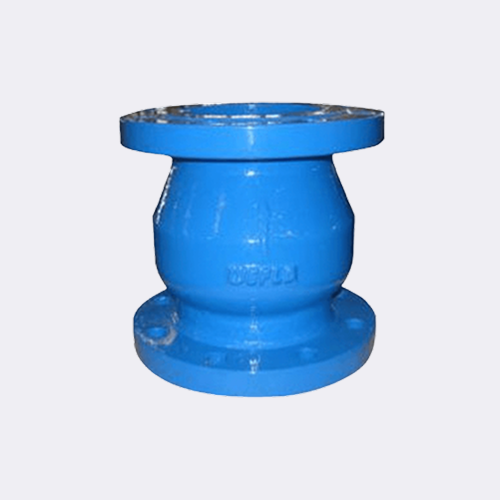
Weflo Ball Valve Fig. 4102
Low-Torque, ISO 5211-Ready Ball Valve for Modern Industrial Flow Control
Why Ball Valves Still Dominate Industrial Piping
In any production facility—whether it is refining crude oil into petrochemical feed-stocks, pasteurising beverages, circulating cooling water around a turbine, or distributing potable water across a metropolitan grid—the humble valve remains the gatekeeper of safety, efficiency, and product quality. Among the many valve families on the market, the ball valve has emerged as a favourite for tight shut-off, bidirectional sealing, and rapid quarter-turn operation. Compared to a gate valve, which excels at isolation but requires multiple hand-wheel turns, or a check valve, which relies on flow direction to close, the ball valve provides zero-leak performance with a single 90-degree movement and minimal operating torque.
For designers who must balance footprint, automation potential, and life-cycle cost, a robust ball valve is often the most flexible solution. Yet selecting the right model is critical—poor metallurgy, high torque, or hard-to-retrofit bodies invite downtime and escalating maintenance budgets. Enter the Weflo Ball Valve Fig. 4102: a DIN-compliant, low-torque, ISO 5211-mountable unit engineered to deliver long-term service in water, utility air, non-aggressive chemical, and general industrial duties—all while remaining cost-effective to procure, easy to maintain, and simple to automate.
Comprehensive Product Description
Construction and Material Excellence
At the heart of the Fig. 4102 is a high-integrity ductile-iron body and end cap pair that offers higher tensile strength and fracture resistance than traditional cast-iron at a fraction of forged-steel weight. The pressure envelope is rated 16 bar / 250 PSI to cover the vast majority of utility services in process plants, food factories, fire-protection loops, and district-heating schemes.
Inside the pressure boundary rests a precision-machined stainless-steel ball polished to a mirror finish for low friction and wear resistance. The stainless-steel stem is anti-blow-out in design, passing through an adjustable graphite or PTFE packing set that ensures emissions compliance without sealing creep. The flow path is seated by a pair of PTFE (Teflon) or graphite reinforced seats, offering chemical inertness, wide temperature tolerance, and low breakaway torque—all critical for successful actuator sizing.
Materials at a glance
• Body & End Cap – Ductile Iron
• Ball & Stem – Stainless Steel
• Seats – 100 % PTFE (standard) or graphite-filled PTFE (high-temperature)
• Body Seal – PTFE / Graphite spiral wound
• Fasteners – Zinc-plated carbon steel (upgradeable to stainless)
Standards, Features, and Engineering Advantages
-
DIN SP-72 Compliance – assures end users in Europe, the Middle-East, and Asia that dimensional tolerances, pressure testing, and wall thickness meet recognised industrial benchmarks.
-
Low Operating Torque – the PTFE seating system and polished ball keep torque predictable over the valve’s life, reducing gear operator size or pneumatic cylinder bore, and lowering automation CAPEX.
-
ISO 5211 Top Flange – a direct drive pad is cast integrally, simplifying the addition of levers, worm-gearboxes, or sophisticated electric and pneumatic control valve actuators without bespoke brackets.
-
Full Bore Flow Path – negligible pressure drop protects upstream pumps from energy loss and lets downstream instrumentation experience near-true line pressure.
-
Split-Body Design with Bolted End Cap – allows technicians to service seats and seals in situ without cutting the valve from the pipeline, a major advantage over welded-body designs.
-
Anti-Static Grounding – an optional spring-loaded device bridges the stem and body to dissipate static charge—essential when handling hydrocarbon vapours.
Operating Principle
Like all quarter-turn devices, the Fig. 4102 employs a drilled sphere. When the stem rotates 90 degrees, the bore aligns with the pipeline, allowing unrestricted flow. A reverse turn brings the solid side of the sphere into the flow, delivering immediate shut-off. The PTFE seats are energised by either line pressure or spring pre-load, ensuring a tight seal—even at low differential pressures where some resilient gate valves struggle to close bubble-tight.
Extended Technical Data Sheet (excerpt)
| Parameter |
Value |
| Nominal Sizes |
DN15 – DN250 (½″ – 10″) |
| Pressure Class |
PN16 / 250 PSI |
| Design Standard |
DIN SP-72 |
| Face-to-Face |
DIN 3202-F4 (≤ DN100), F5 (> DN100) |
| Temperature Range |
–10 °C to +180 °C (with graphite seats) |
| Leakage Rate |
ISO 5208 Rate A (bubble-tight) |
| Torque @ 10 bar, DN50 |
≤ 22 N·m (new seats) |
| Actuator Flange |
ISO 5211 F05 – F12 (size-dependent) |
| End Connections |
BSPT threaded, ISO 7005 PN16 flanged, or ANSI 150 grooved option |
Values are representative; consult factory test sheet for final sizing.
Maintenance Philosophy
Because the valve is actuator-ready and employs PTFE seats, routine service intervals extend well beyond those of elastomeric plug or butterfly valves. Should wear occur, engineers can unbolt the threaded end cap, drop the ball-seat cartridge, replace consumables, torque bolts to spec, and hydro-test—all without moving pipe supports or rewelding spools.
Application Spectrum: Where Fig. 4102 Excels
-
General Water & Waste-Water Handling – from secondary clarification basins to tertiary filtration skids, the full-bore design avoids clogging by fibrous solids and minimises head loss.
-
HVAC & District Energy – low torque and bubble-tight shut-off prevent chilled-water leakage into idle loops and keep glycol from bleeding into make-up lines.
-
Utility Air & Inert Gas – stainless ball/seats resist moisture corrosion; ISO 5211 pad simplifies installation of limit-switch boxes for compressor interlocks.
-
Food & Beverage CIP Systems – PTFE wetted parts meet FDA/EC directives, and quick seat replacement fits weekend maintenance windows.
-
Fire-Protection Ring Mains – though check valves and OS&Y gate valves dominate isolation duty, Fig. 4102 is ideal for diesel-pump test headers and zone bypasses, where quarterly cycling demands longevity.
-
Pharma & Light Chemical Dosing – non-reactive seats and anti-static options safeguard delicate formulations while ensuring operator safety.
-
Equipment Skid Manufacturers – modular design with grooved ends shaves build time and reduces skid weight for export.
Distribution, Stock, and Service Commitment
We operate as a regional valve distributor and full-service valve stockist for Weflo’s complete product family. What does that mean for your procurement timeline?
-
Extensive Inventory: Common DN50–DN150 sizes are stocked in both flanged and threaded ends; exotic seat materials and larger diameters ship within two weeks.
-
24-Hour Dispatch: Orders confirmed before 14:00 Jakarta time leave our warehouse the same day, with air-freight options for urgent plant shutdowns.
-
Engineering Support: Our in-house valve specialists size torque, specify actuator models, and supply 3-D CAD blocks so your designers can drop Fig. 4102 into piping layouts without delays.
-
Assembly & Testing: Actuated packages—complete with solenoid valves, limit switches, and positioners—are built, tested, and tagged under ISO 9001 procedures in our service shop.
-
Documentation & Traceability: Every valve ships with mill certificates, hydro-static test reports, and unique serial numbers to satisfy ISO 45001 and API audits.
When you partner with us, you gain not only rapid access to stock but also a technical ally who understands the nuances of torque curves, CV calculations, and automation wiring diagrams—so your new control valve installations work right the first time.
Why Choose Weflo Fig. 4102 Over Competing Ball Valves?
-
Predictably Low Torque – no unexpected gearboxes or oversized actuators that blow project budgets.
-
True Upgrade Path – ISO 5211 pad ensures future automation without pipe rework.
-
Durable Wet-End Materials – stainless wetted components shrug off chlorides and minimize pitting.
-
Service-Friendly Body – seat swaps occur in hours, not days.
-
Standards Alignment – DIN face-to-face and SP-72 compliance simplify global specification on EPC bids.
-
Life-Cycle Economy – fewer spare parts, less downtime, proven five-year seat life in municipal test loops.
Collectively, these advantages translate to lower total installed cost and fewer headaches for maintenance planners.
Talk to a Valve Specialist Today
Your flow-control network deserves a ball valve that performs flawlessly from day one and keeps performing five, ten, or twenty years down the road. The Weflo Ball Valve Fig. 4102 checks every box—pressure, materials, torque, and serviceability—while giving you the flexibility to automate whenever operational demands change.
📞 Ready to specify, price, or retrofit an existing line?
Call our valve engineers now, or email sales@ourcompany.com, and receive:
-
A same-day quotation with data sheets
-
Actuator sizing recommendations (electric or pneumatic)
-
Shipping lead-times based on real-time stock
Don’t wait for corrosion, seat wear, or unexpected torque spikes to force an emergency shutdown. Secure a reliable solution—and the peace of mind that comes with proven Weflo quality—today.